Most modern homes have experienced a moisture crisis where buildings are tightly sealed, visually refined and but still relying on surface finishing approaches that can trap moisture instead of properly managing it. That is where proven modern tiling solutions become foundational to long-term home performance. Tiles are no longer just aesthetic carriers; they have become functional surface systems that curate your interior design to align with your home’s operational, environmental, and psychological needs.
1. Waterproof Surface Enclosures Using Dense Glazed and Fired Clay Tile Systems
In water-prone zones, the real challenge is not visible moisture, it is hidden migration into substrates.The most reliable tiling approach here combines high-density glazed ceramic, porcelain tile systems, and tightly set fired clay (terracotta) formats with sealed grout lines to create a controlled enclosure layer.
Read More: Construction Site Setup Essentials for Safer, Smarter Projects
Practical system application:
- Glazed ceramic or porcelain for near-zero water absorption zones
- Terracotta wall tiles in controlled finishes for breathable but stable moisture regulation
- Full-height wall tiling in wet zones (not partial splash coverage)
- Epoxy or polymer-modified grout systems to block capillary movement
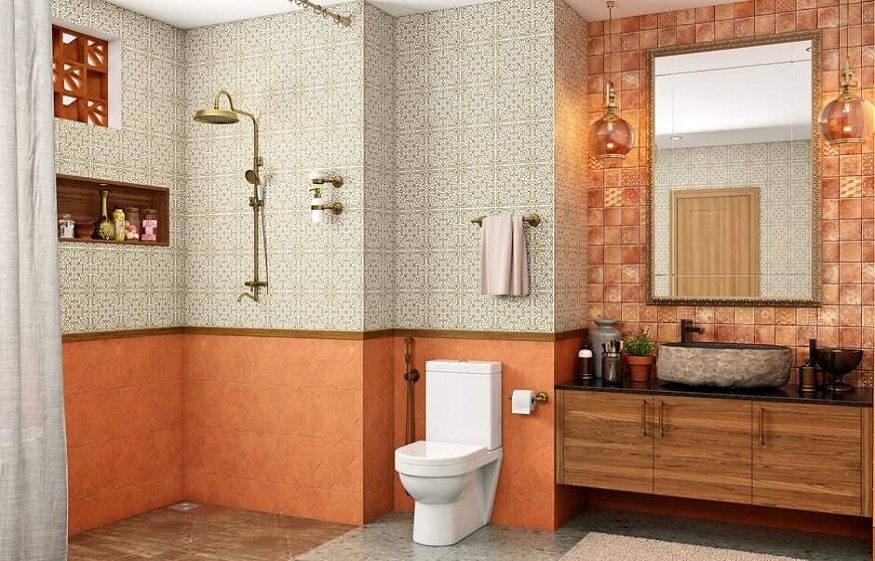
Installing quality Terracotta Bathroom Tile safeguards the underlying subfloor against deep moisture migration while simultaneously providing a warm, slip-resistant surface underfoot—making it especially comfortable for barefoot bathroom walking.
This transforms the surface into a protective membrane rather than a decorative layer. Water is no longer managed after entry, it is stopped at the surface plane.
2. High-Density Structural Tiles for Impact and Load-Resistant Flooring Systems
Daily environments generate constant micro-impact, dropped objects, rolling loads, dragged furniture, and pressure concentration zones.The solution lies in high-density ceramic, terracotta 8×8 formats, hexagon tiles, and modular slab-based layouts like 4×8 and 6×3 squoval systems, designed to distribute stress across a continuous surface grid.
System behavior:
- Dense fired clay bodies resist chipping under repeated impact
- Modular layouts disperse weight instead of concentrating stress
- Hexagon and interlocking formats improve structural load balance
- Textured finishes reduce slip risk in high-movement areas
That way, the raw physical matter and the geometric assembly of the tiles respond to real-world physical forces like moisture, impacts, weight, and motion.
3. Hygienic Seam-Controlled Tile Surfaces for Cleanability and Contamination Resistance
In high-use interiors like kitchen floors, splash areas, vanity walls, shower floors, and mudrooms, contamination rarely sits on the surface, it embeds into pores, cracks, and unsealed transitions.The most effective flooring solution is low-porosity glazed tile systems combined with tight-joint installation layouts using rectified ceramic or smooth terracotta finishes.
Applied systems include:
- Rectified tiles with minimal grout spacing for reduced contamination zones
- Glazed ceramic or porcelain for wipe-clean impervious surfaces
- Controlled grout color matching to reduce visual dirt retention
- Continuous wall-to-floor tiling in wet utility environments
Such solutions create a sealed plane where hygiene is maintained through surface contact, not deep cleaning intervention. That solves the two biggest frustrations of managing a home: time poverty and structural degradation.
4. Anti-Slip Textured Tile Systems for Hydro-Safe Movement Control
Safety in wet environments like laundry areas and ablution facilities is defined less by water presence and more by surface friction behavior under moisture.The most reliable solution is matte terracotta, textured ceramic finishes, and patterned tile systems such as Star & Cross or geometric grip-based layouts, which disrupt water film formation.
Performance-led applications:
- Matte terracotta for natural traction in wet zones
- Patterned tile systems to interrupt continuous slip planes
- Micro-textured surfaces in bathrooms, entries, and kitchens
- Strategic zoning using higher-grip tiles in transition areas
Here, tiling stops being passive flooring and becomes a controlled movement system.
5. The Golden Rule for Hydro-Zone Design
A tile system that only performs visually but fails under moisture, impact, or hygiene pressure is not a complete installation, it is an unfinished risk layer.Real tiling strategy is defined by how it behaves when exposed to water, weight, and repetition, not how it appears at installation.
Read More: Why NJ Homeowners and Contractors Trust Local Dumpster & Porta Potty Rental Pros
In essence, in high-performance interiors, surface systems are no longer judged at completion, they are evaluated over time, under pressure, and through repeated use cycles. When correctly specified, tile systems shift from being just decorative finishes into protective infrastructure that proactively address the vulnerabilities of a building. However, optimizing the real value of tiling lies on partnering with a reliable tile store that offers quality, diversity, and transparency.