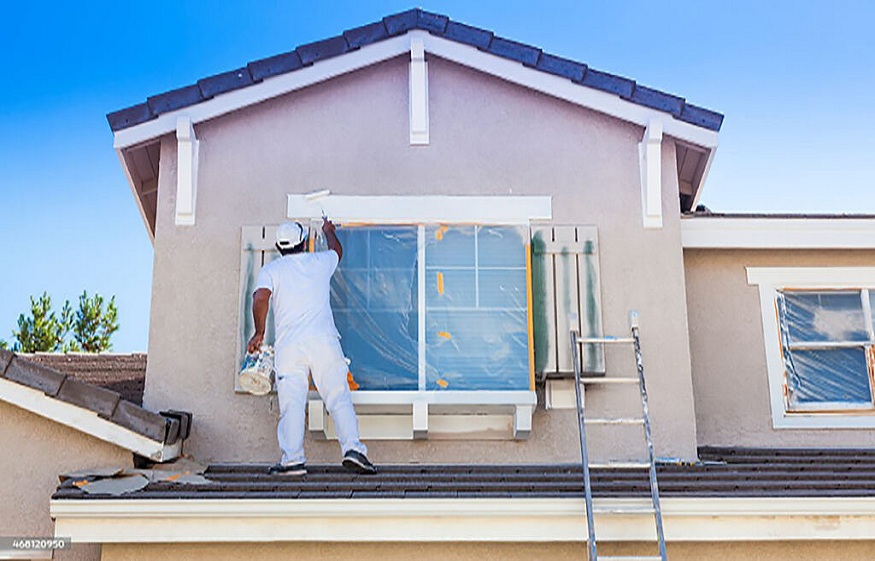
Most people think exterior painting is just slapping a new color on walls and calling it “done.” That’s amateur hour. The truth? A standard painter charges for the gallon and the hour. A professional painter is a strategic asset manager who charges for the engineering of longevity. That reframes your pint job invoice as a “defense budget” rather than a “decoration bill.”
1.Protective Painting of Stucco and Siding: The “Dynamic Armor”
Your walls aren’t static—they breathe, expand, and contract with every swing in temperature. Ordinary paint treats them like dead surfaces. Exterior House Painting Calgary experts intervene here by shifting the technical goal from occlusion (covering a surface) to elongation and permeability (managing a moving substrate). That way, your home’s exteriors become like living, moving systems.
Read More: Construction Site Setup Essentials for Safer, Smarter Projects
- Elastomeric coatings stretch over hairline cracks, maintaining a waterproof barrier while letting vapor escape.
- Movement management ensures thermal cycles don’t fracture your finish.
- Breathable, flexible shield: the surface doesn’t just wear paint—it survives, adapts, and protects.
Here, chemistry meets physics. This isn’t decoration—it’s a calculated defense system that respects material science and environmental forces.
2.Decks and Fences Painting for “Cellular Hydration”
Decks and fences are not vertical—they collect water, absorb UV, and endure relentless traffic. Surface paint alone fails.
- Saturation science replenishes natural oils in wood fibers, keeping structure sound and preventing graying or rot.
- Penetrating stains hydrate from the inside out while leaving a hydrophobic barrier.
- Dynamic flexibility allows natural expansion and contraction without cracking.
This isn’t maintenance—it’s engineered intervention, turning vulnerable horizontal surfaces into long-lasting, structurally sound assets.
3.Trim, Doors and Carpentry Paint Work to Enhance the “Structural Detail”
High-touch areas like trim and doors are weak points. A beautiful finish is meaningless if rot or water intrusion lurks beneath.
- Soft wood detection replaces compromised fascia or trim with PVC or thermally modified wood.
- High-durability enamels resist friction, UV, and weather while preserving a factory-smooth look.
- Structural precision ensures every seam and joint reinforces the home’s skeleton.
This pillar separates “looks nice” from “fortified investment.” Attention to detail here is non-negotiable.
4.Power Washing: The “Biocidal Foundation”
Preparation is strategy, not chore. Misused power washing accelerates decay; done right, it’s tactical sterilization.
- Soft washing with biocides eliminates algae, mold, and microscopic spores at the source.
- Substrate readiness removes chalk, salts, and debris for proper mechanical adhesion.
- Tactical reset ensures every layer applied afterward performs at peak efficiency.
Without this foundation, every subsequent step is compromised.
The Aggregate Advantage: Asset Resilience
| Element | Traditional View | Engineered View |
| Philosophy | Aesthetic Improvement | Asset Fortification |
| Execution | Color Application | Systemic Restoration |
| Durability | 3–5 Years | 3–5 Years |
| Financial Value | Cosmetic Flip | Long-term Equity Protection |
In essence, this professional and modern paintwork represents the transition from the narrative of simple ‘maintenance’ to resilient and holistic ‘strategy.’ Such expertise help shift the focus from a temporary cosmetic fix to a long-term capital preservation plan. It ensures the home isn’t just painted—it’s fortified against the survival game of the environment.
Read More: Why NJ Homeowners and Contractors Trust Local Dumpster & Porta Potty Rental Pros